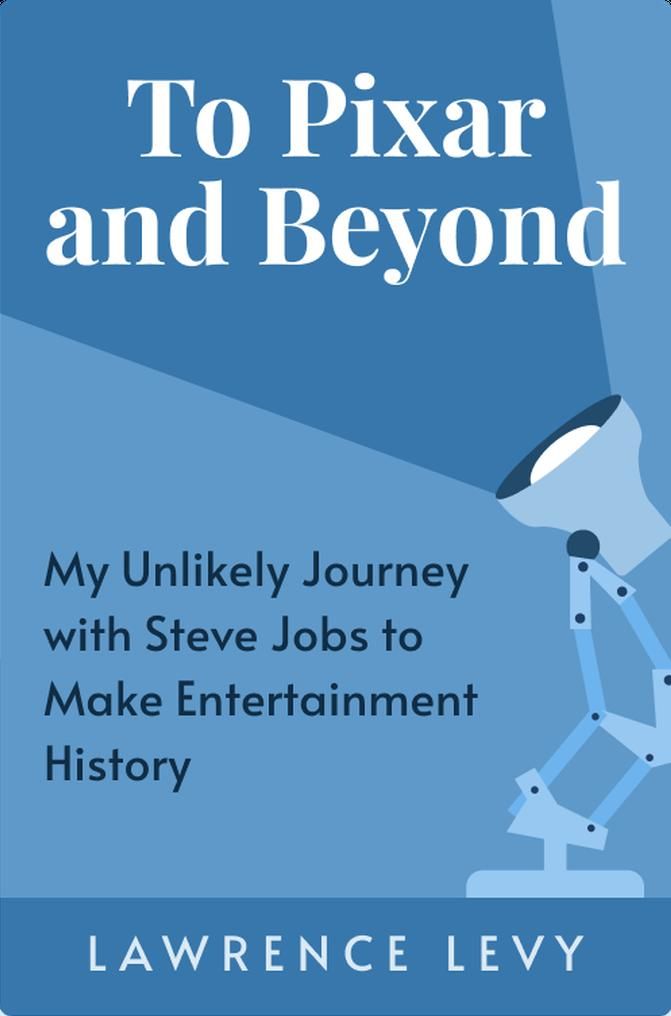
To Pixar and Beyond
My Unlikely Journey with Steve Jobs to Make Entertainment History
by Lawrence Levy
About this book
To Pixar and Beyond (2016) tells the story of how Lawrence Levy and Steve Jobs turned an unknown and struggling computer imaging company – Pixar – into an animation studio worth billions of dollars. Along the way, the company faced numerous internal and external challenges, tackling each with creative and strategic decisions that ultimately led to its success.
Chapter Preview
Chapter 1 of 8The prospect of working in an inspirational environment lured Lawrence Levy to Pixar.
In November 1994, Lawrence Levy received a life-changing phone call. At the time, Levy was CFO at a desktop publishing start-up called Electronics for Imaging. One day, he was told that none other than Steve Jobs, the cofounder of Apple, was on the line. Although Jobs had left Apple ten years prior, he was still a notable figure in Silicon Valley – a call from him was a big deal.
Jobs wanted to talk about Pixar, a small imaging computer and software company he owned. He wanted Levy to help run it, develop its strategy, and eventually take it to the stock market. After all, Levy had done the same for other Silicon Valley start-ups.
The catch? Pixar wasn’t doing well. But despite that, it still looked like an incredible opportunity to Levy.
The key message here is: The prospect of working in an inspirational environment lured Lawrence Levy to Pixar.
To get a better sense of what lay ahead of him, Levy did some research on Pixar. No one he asked knew how the company was staying afloat. As it turned out, Jobs was writing monthly checks to keep it running. At that point, he’d already poured $50 million into the company.
Pixar’s future definitely looked bleak, and Levy worried he’d be risking his career by jumping on board. But a tour of the company’s facilities made him reconsider.
Levy met Pixar’s cofounder, Ed Catmull, who showed him a scene from a new film project: Toy Story. Levy was blown away. Toy Story would go on to become the world’s first feature-length computer-animated film, but it wasn’t just technically impressive. The storytelling transported Levy, to the point where he found himself empathizing with the toys on the screen!
Afterward, Levy got a glimpse into how the film was created. He met John Lasseter, Pixar’s creative lead, and saw some of the company’s tools. There was a hand-built machine that transferred computer images onto film, thousands of highly detailed storyboards, and computers that produced each frame of the movie. Everything Levy saw convinced him that Catmull and Lasseter were destined to succeed and that it would be an honor to work with them.
Nonetheless, he still had doubts about joining Pixar. He wasn’t sure how the company could become viable. And while he’d easily connected with Jobs, Levy was wary of the man’s reputation for being difficult. Ultimately, the opportunity was simply too intriguing to pass up. Levy accepted the role of executive vice president and chief financial officer at Pixar.
7 More Chapters Available
Sign up for free to read all chapters, chat with the book, get personalized recommendations, and more.
Want to read more?
Join BookPulse to access all chapters, chat with books and authors, get AI-powered recommendations, and discover your next favorite read.