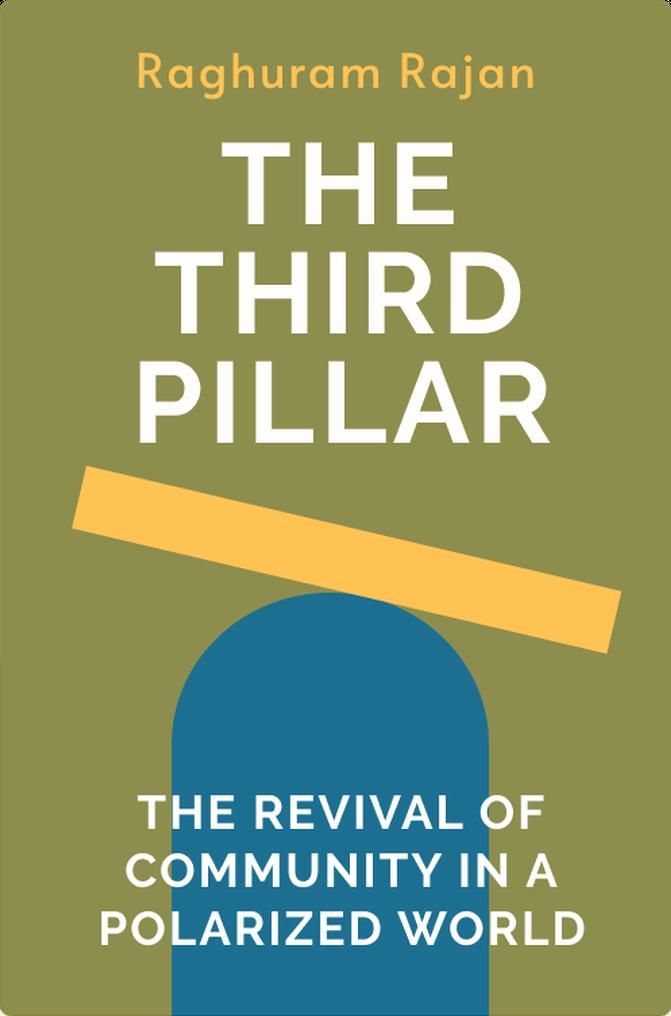
The Third Pillar
The Revival of Community in a Polarized World
by Raghuram Rajan
About this book
The Third Pillar (2019) traces the evolving relationship between the three “pillars” of human life – the state, markets and communities – from the medieval period to our own age. Economist Raghuram Rajan argues that, throughout history, societies have struggled to find a sustainable balance between these pillars. Today is no different: caught between uncontrolled markets and a discredited state, communities everywhere are in decline. That, Rajan concludes, is jet fuel for populist movements. But a more balanced kind of social order is possible.
Chapter Preview
Chapter 1 of 9The feudal manors of medieval Europe were swallowed up by emerging nation-states.
Medieval Europe was a patchwork quilt of self-governing manors owned by the continent’s leading noble families. Peasants pledged allegiance to their masters and paid taxes. In return, they were permitted to work part of their land.
The manors were self-contained communities governed by lords, who settled disputes among tenants and saw that justice was done. Goods produced on these estates were traded internally rather than exported. All in all, it was a social arrangement dominated by the community pillar.
The fact that the medieval Church prohibited usury – the practice of charging interests on loans – cemented the sense of community felt by the inhabitants of manors. Rather than being given in the expectation of a monetary reward, help was a social obligation: people gave each other a hand knowing that their neighbors would return the favor.
In the fifteenth century, technological developments disturbed this social order. Why? Well, innovations like the siege cannon changed the rules of the game. If you wanted to survive, you needed enough cash to fund a large army and defensive structures. Small manors just didn’t have the means to do that, so enterprising rulers began combining their estates.
By the end of the century, the number of sovereign entities in Europe had halved to just 500. This was the beginning of a new era – the age of nation states. These new states eventually became so powerful that they eclipsed the Church, an institution whose laws had traditionally been seen as trumping secular law.
When Henry VIII ascended to the English throne in 1485, for example, he was determined to expand his kingdom’s military prowess. He made up for shortfalls in his budget by seizing Catholic monasteries and selling their lands to lower status nobles. The most astute investors in these former Church properties became known as the “gentry” – an entrepreneurial agricultural class that invested in the productivity of their holdings and used the profits to buy up even more land.
By the end of the sixteenth century, states had come into their own. Monarchs ruled a unified people and levied taxes on the gentry to cover the costs of increasingly expensive wars. The state was in the ascendance but, as we’ll see in the next blink, it’s dominance would soon be challenged by the market.
8 More Chapters Available
Sign up for free to read all chapters, chat with the book, get personalized recommendations, and more.
Want to read more?
Join BookPulse to access all chapters, chat with books and authors, get AI-powered recommendations, and discover your next favorite read.