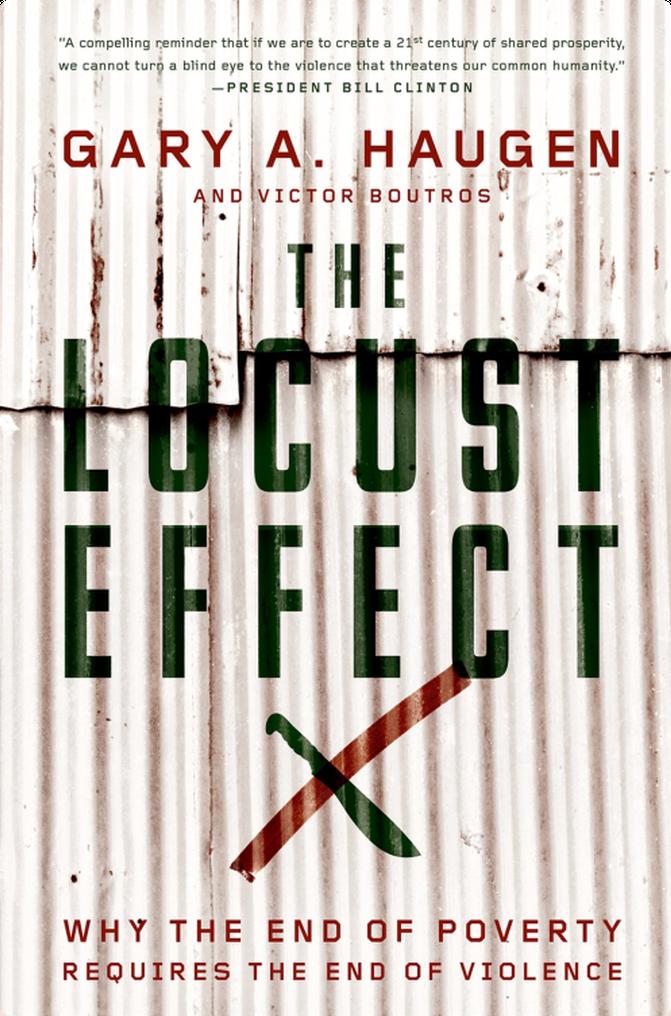
The Locust Effect
Why the End of Poverty Requires the End of Violence
by Gary A. Haugen and Victor Boutros
About this book
The Locust Effect (2014) argues that foreign aid is only useful to developing countries if their impoverished citizens have protection from violence and crime. Without this, aid money is wasted because neither individuals nor businesses are safe to grow. Financial donations should aim to strengthen national criminal justice systems, so countries can serve themselves in the long run.
Chapter Preview
Chapter 1 of 7Violence has a big impact on the populations and economies of developing countries.
Many people believe that impoverished communities are the root of society’s problems. Wealthier classes even tend to fear them. But low-income communities aren’t the real threat – that comes from those who are violent toward them.
Violence is the most destructive force in society. It’s worse than any natural disaster, even hurricanes.
Hurricane Stan, for instance, took a big toll on Guatemala’s economy when it hit in 2005, and was widely regarded as a huge disaster. However, criminal violence costs Guatemala roughly twice as much each year. It accounts for a 7.3 percent loss in GDP, according to World Bank development reports.
Violent crime has an even greater cost in countries like Colombia or El Salvador, where it’s said to reduce economic growth by as much as 25 percent every year.
Violence harms a nation’s economy in a number of ways. For one, it cuts down the workforce by rendering healthy people incapable of work.
Disability Adjusted Life Years measures this problem by estimating how many years of work are lost because of violence. Every year, nine million Disability Adjusted Life Years are lost just due to women being raped or abused.
This has a big impact in places like Africa, where 80 percent of the farm work is done by women. Violence can severely cut food production in some of the world’s poorest regions.
And of course, violence has an even greater impact on the victims. This is especially disastrous in developing countries like Ethiopia. A 2009 Human Rights report in Ethiopia showed that victims of violence suffer higher rates of depression, substance abuse and suicide.
6 More Chapters Available
Sign up for free to read all chapters, chat with the book, get personalized recommendations, and more.
Want to read more?
Join BookPulse to access all chapters, chat with books and authors, get AI-powered recommendations, and discover your next favorite read.