About this book
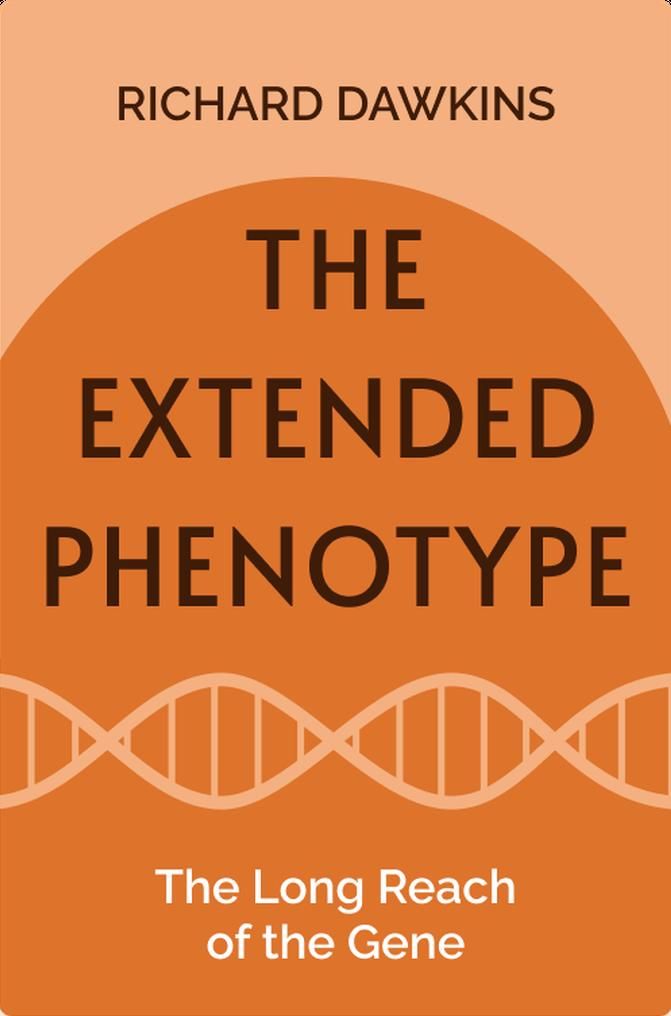
The Extended Phenotype (1982) offers an alternative view on biology and the process of evolution. Breaking with the Darwinian paradigm that puts the individual organism center stage, author Richard Dawkins shifts the focus toward genes as the active agents in natural selection. From this perspective, a world of fascinating insights emerges.
Chapter Preview
Chapter 1 of 12When considering evolution, we should think of genes as well as organisms.
Ever since Charles Darwin’s theory of evolution was published back in the mid-nineteenth century, his observations have often been summarized with the popular concept of “the survival of the fittest.” When we imagine how this survival takes place, we take a very specific biological perspective on which organisms are fighting for survival.
When we think of life, we think of the large organisms Darwin wrote about, such as birds, orchids or humans, and we picture these plants and animals as being the selfish ones fighting for their survival.
So, even though we recognize larger units, such as societies, populations and ecosystems, as well as smaller units such as cells and genes when it comes to biological evolution, we almost always talk about “selfish organisms.” Most evolutionary biologists focus their study on the individual body – so for them it's organisms, not populations or genes, that compete and evolve.
But an interesting thing happens when we shift our focus away from the individual bodies toward the genes, and we start thinking about “selfish genes” rather than “selfish organisms.”
Making this shift in perspective is a lot like adjusting the way you look at a Necker cube, which is the name of the typical 3D cube you’ve probably drawn on a piece of paper numerous times. It’s just two overlapping squares, one slightly above the other, with four diagonal lines connecting the corners.
When you look at a Necker cube, you can see it in two different ways, with either the lower square or the upper square making up the front of the cube. But there’s no one correct way of seeing it – both perspectives are equally valid and accurate.
And it’s the same for our biological perspective on what’s fighting for survival: both the organism-centric view and the gene-centric view are valid. So, when we shift to the genetic point of view, we’re not looking at things from a single correct perspective. Instead, we’re opening the door to new questions that go beyond, “Why are certain genes useful to an organism?” Now we can ask, “Why are certain genes often grouped together in organisms?”
In the blinks ahead we’ll further explore these questions and much more.
11 More Chapters Available
Sign up for free to read all chapters, chat with the book, get personalized recommendations, and more.
Want to read more?
Join BookPulse to access all chapters, chat with books and authors, get AI-powered recommendations, and discover your next favorite read.