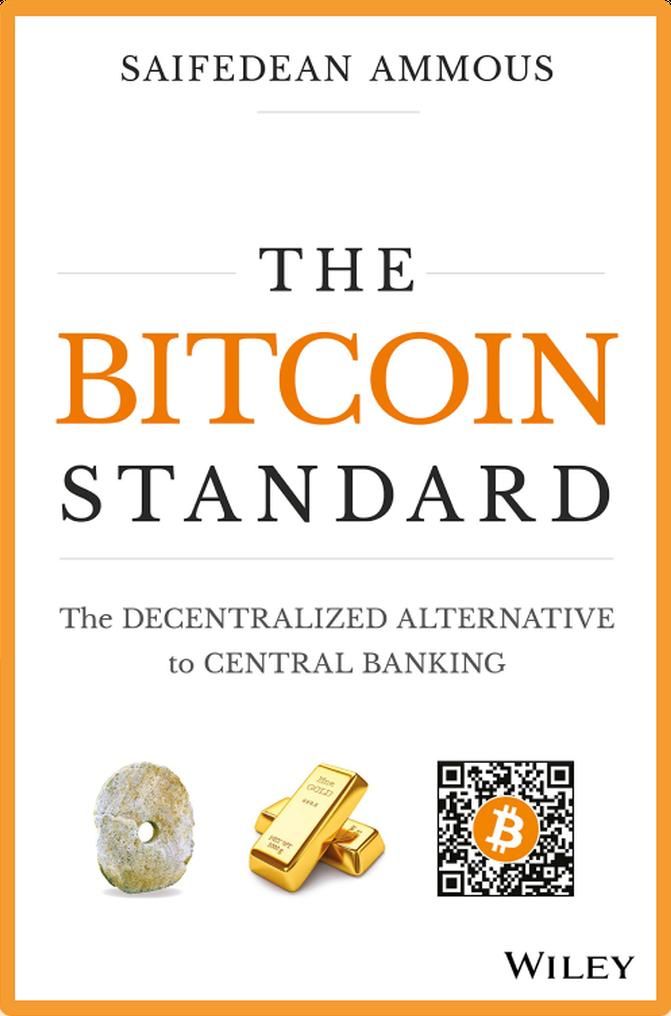
The Bitcoin Standard
The Decentralized Alternative to Central Banking
by Saifedean Ammous
About this book
The Bitcoin Standard (2018) traces the story of money, from the very first rock currencies to the Victorians’ love affair with gold and today’s new kid on the block – digital cryptocurrency. Saifedean Ammous, an economist convinced that we need to embrace the forgotten virtues of sound money, believes Bitcoin might just be the future. Like yesteryear’s gold reserves, it has unique properties that mean it’s ideally placed to act as a medium of exchange that can’t be manipulated by bumbling governments. And that’s great news if we want to return our economies to stability and growth and put the cycle of boom and bust behind us.
Chapter Preview
Chapter 1 of 9Money was first used as a medium of exchange.
How does an economy work without money? Simple, you swap stuff. Call it barter, or direct exchange. You could trade two pigs for a cow, or for a haircut – it all depends on what you have and what your neighbor needs, or vice versa. But here’s the problem: sometimes those things don’t align. Don’t have anything to tempt your would-be trading partner? Well, tough luck – you won’t get what you want, either! That’s where money comes in. Because everyone wants it, you can use it for any transaction. That’s known as indirect exchange.
Early money wasn’t anything like the stuff you keep in your wallet today, though.
Take the inhabitants of Yap Island in the Federated States of Micronesia. Well into the nineteenth century, they used “Rai stones” for their trading. These stones came in all shapes and sizes, the largest weighing a staggering four tons! When a new stone was ready, it was dragged up a hill so that everyone could see it. Its owner would then exchange ownership or part-ownership of the stone for goods and services. Every transaction was announced to the whole community, which in turn acknowledged the exchange.
This kind of money worked for so long because it was salable. The Yap Islanders knew that if they owned Rai stones, they could also sell them. The added boon was that they could be used around the whole island since the stones were visible from any point. They were also divisible. If you wanted something small like a basket of fruit, you sold a small part of your stone; if you wanted something bigger like a raft, you sold a larger piece, or even the whole stone.
So if Rai stones worked so well, why don’t the Islanders still use them today? Well, there was a snag: they didn’t retain their value, or salability over time. Initially, that hadn’t been an issue. Quarrying and moving them from nearby islands was such a difficult business that the supply of stones was limited and their value remained stable. That changed in the late nineteenth century with the arrival of David O’Keefe, an Irish-American captain who’d been shipwrecked on the island. O’Keefe started importing Rai stones in large numbers using modern technology to exchange for coconuts. Soon enough, they were so commonplace that they no longer worked as money – they had been transformed back into mere stones!
8 More Chapters Available
Sign up for free to read all chapters, chat with the book, get personalized recommendations, and more.
Want to read more?
Join BookPulse to access all chapters, chat with books and authors, get AI-powered recommendations, and discover your next favorite read.