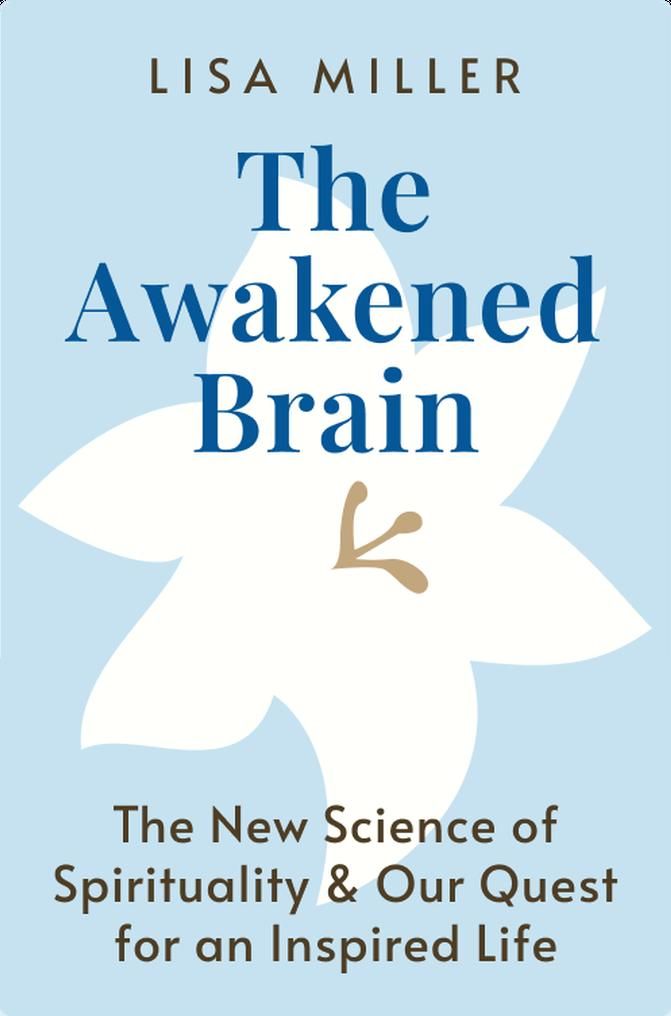
The Awakened Brain
The New Science of Spirituality and Our Quest for an Inspired Life
by Lisa Miller
About this book
The Awakened Brain (2021) reveals the science of spirituality. Drawing on Dr. Lisa Miller’s decades of research and her own personal journey, it locates an innate capacity for spirituality in human biology. When engaged, this spiritual awareness can protect against depression, support health, and reveal the deep interconnection between all life.
Chapter Preview
Chapter 1 of 7Spirituality protects against depression.
The original challenge to Dr. Lisa Miller’s thinking about traditional psychology came early in her first role out of graduate school.
It was fall and the in-patient ward where she worked in Manhattan had nothing planned for Yom Kippur, the holiest day in the Jewish calendar. So she organized it herself – a dinner in the ward’s tiny back kitchen.
The four patients who attended were normally agitated and volatile. But as soon as they started singing and praying together, something changed. They became calm. They smiled and expressed gratitude.
Miller was shocked. In her entire time there this was the biggest shift in behavior she’d seen, and it hadn’t come from treatment. What was the secret behind this moment? she wondered. And what did it mean for treating depression?
The key message here is: Spirituality protects against depression.
The following year, Miller got the chance to better understand what had caused the dramatic change in the patients when she landed a job at Columbia University.
Every morning, she’d commute to campus and pore over the data from her study. She was researching the factors that increase children’s risk of, and resilience against, depression.
The data came from patients at a depression clinic in New Haven tracked over the course of 15 years. Each was matched with a nondepressed control subject who shared similar demographics.
The research revealed significant patterns, like how poverty and having a mother with depression increase a child’s risk of depression, while affectionate parenting styles protect against it.
But she couldn’t stop thinking about the healing shift she’d witnessed at the Yom Kippur dinner, and whether it had something to do with a spiritual experience. How could she measure the relationship between spirituality and depression?
She looked at the survey data again. If both a mother and her child said that religion or spirituality were important to them, did this protect against child depression? She compared them to mother-child pairs who both said spirituality wasn’t important or gave differing responses.
The results were astounding. When both a mother and her child had high spirituality, the child was 80 percent protected against depression. In fact, intergenerational transfer of spirituality was by far the strongest protective factor against depression she’d found.
Miller’s lifelong journey to discover the science of spirituality had begun.
6 More Chapters Available
Sign up for free to read all chapters, chat with the book, get personalized recommendations, and more.
Want to read more?
Join BookPulse to access all chapters, chat with books and authors, get AI-powered recommendations, and discover your next favorite read.