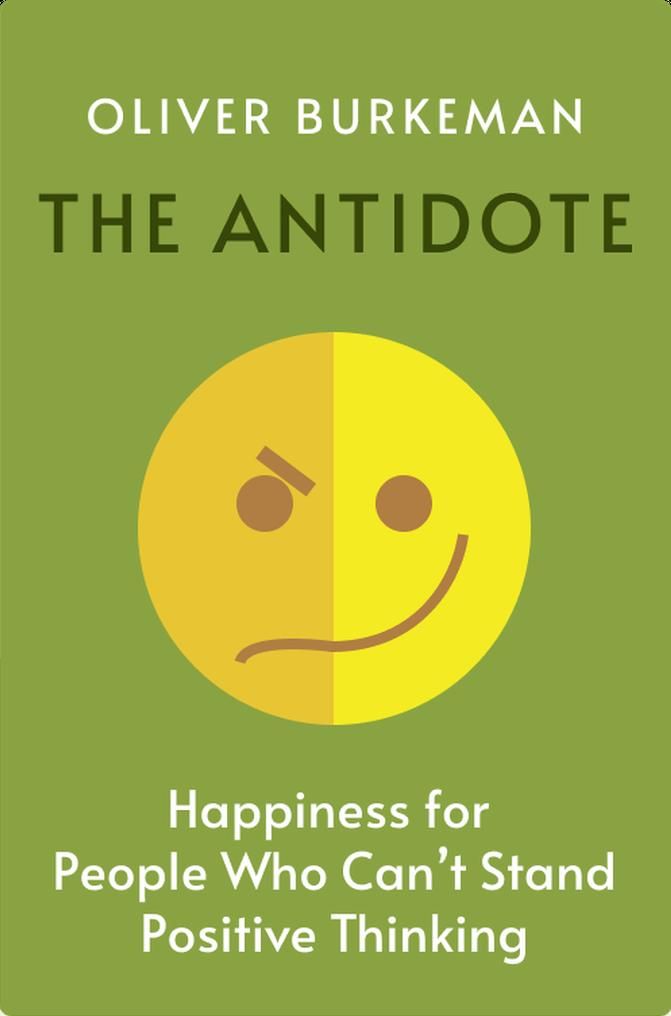
The Antidote
Happiness for People Who Can’t Stand Positive Thinking
by Oliver Burkeman
About this book
The Antidote is the intelligent person’s guide to understanding the much-misunderstood idea of happiness. The author emphasizes that positive thinking isn’t the solution, but part of the problem. He outlines an alternative, “negative” path to happiness and success that involves embracing failure, pessimism, insecurity and uncertainty – what we usually spend our lives trying to avoid.
Chapter Preview
Chapter 1 of 9The self-help industry is shallow and fraudulent – and it won’t make you happier.
The plethora of self-help books promising its readers a better life speaks to our culture’s obsession with achieving happiness. But if you strip away the shiny covers and flashy slogans, it won’t take you long to realize that the messages they contain are completely banal.
For example, The Seven Habits of Highly Effective People, one of the bestselling self-help books of all time, essentially instructs readers to decide what matters most to them in life and do it.
A similar bestseller, How to Win Friends and Influence People, advises readers to be pleasant rather than obnoxious, and to use people’s first names a lot.
And some of these books aren’t just banal – they’re downright false. Several best-selling books on the importance of setting goals quote the so-called Yale Study of Goals. In this study, students from Yale’s graduating class of 1953 were asked whether they had concrete, written-down goals for their lives. Only 3% of them said they had. Two decades later, when members of the class were located and asked how their lives had turned out, lo and behold, the 3% who had written down their goals had amassed greater financial wealth than the other 97% combined.
This study would be great evidence that writing down goals could secure future success – if it weren’t a fake. Indeed, it was later revealed that the Yale Study of Goals never took place at all.
Finally, self-help books often imply that a person’s level of happiness corresponds to their level of wealth. And yet, one of the best-known general findings of the “science of happiness” is that most of the advantages of modern life haven’t lifted our collective mood. Above a certain basic level of income, making more and more money doesn’t make us happier and happier.
Similarly, international studies have shown that some of the world’s poorest countries are the happiest. In one survey, Nigeria, where 92% of the population lives on less than two dollars a day, came in first place.
8 More Chapters Available
Sign up for free to read all chapters, chat with the book, get personalized recommendations, and more.
Want to read more?
Join BookPulse to access all chapters, chat with books and authors, get AI-powered recommendations, and discover your next favorite read.