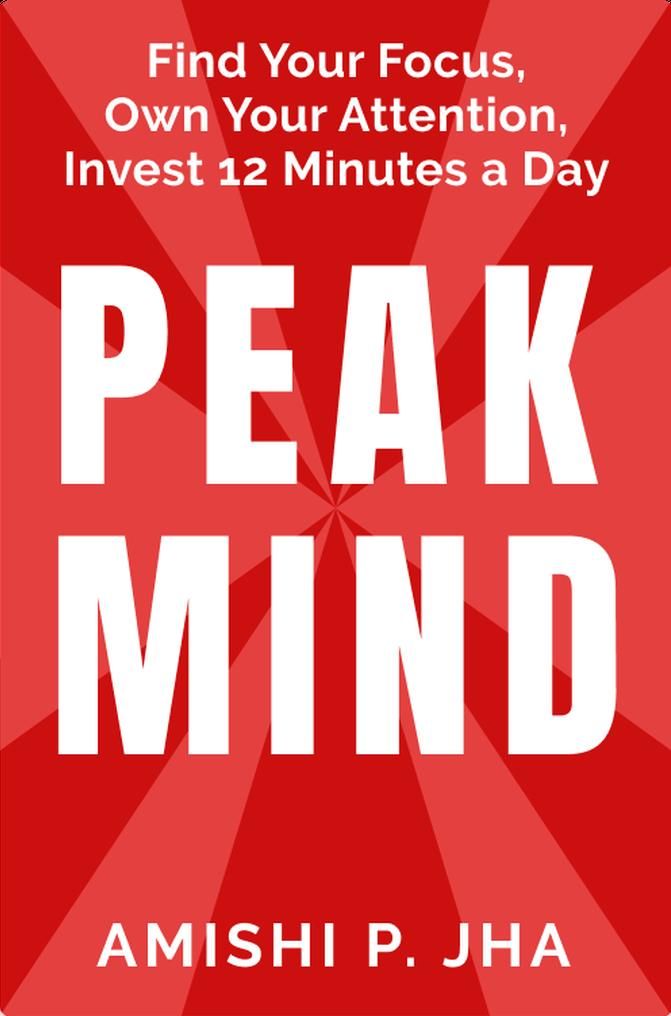
Peak Mind
Find Your Focus, Own Your Attention, 12 Minutes a Day
by Amishi Jha
About this book
Peak Mind (2021) provides a cutting-edge overview of the science of attention – looking at the various ways your mind focuses and pays attention, as well as the factors that cause our mental vigilance to lapse and weaken over time. What’s more, it lays out a simple, easy-to-follow regimen to keep your mind in tip-top shape – even as you deal with the ups and downs of life.
Chapter Preview
Chapter 1 of 9What's in it for you? Get your attention into peak shape.
Imagine this: you’re a firefighter – and not just any firefighter, either. You’re a specially trained emergency responder in the Australian bush. Your job is controlling the blazes that regularly break out in the country’s scrubland.
It’s not an easy job. The bush is inaccessible by land, so you and your team rappel into the area from a helicopter and then fan out, each of you carrying a big bag of tools and specialized equipment. Each firefighter takes their own section, where they’ll aim to contain the rapid spread of the fire.
You know that before long, a support helicopter will drop foam and water on the blaze. But for now, you’re on your own. So you get to work. Sweat pours down your face as the sound of an inferno rages in your ears. As you tackle the intensity of the fire roaring in front of you, you lose yourself in the work, focusing on the urgent task at hand.
After a while, though, something suddenly grabs your attention: a huge whooshing noise. It’s the sound of a gigantic amount of air being sucked up by the flames, and it means that while you were honing in on the fire in front of you, a wall of fire crept up the other side.
So what happened? Basically, your attention failed you – not because you couldn’t focus, but because you focused too much. When your mind zeroed in on one small patch of flames, your awareness of the broader situation became hazy and unclear. In this case, a lapse of attention endangered your life.
Now, forget the flames for just a second. Let’s say you survived. There are two things you can learn from your close brush with death. Number one is this: issues of attention can be life threatening.
Sure, you might not be a firefighter or a soldier. But do you drive? Are you a pedestrian who needs to cross roads on foot? Do you take any medications? All of these things require your attention, and messing them up can be fatal.
Point number two? Attention is misunderstood. When people talk about it, their thinking is often confused and imprecise, and based on a big misconception: that attention describes a single phenomenon. That simply isn’t true. Attention is actually three subsystems, each of which does something distinct. We’ll call these subsystems the flashlight, the floodlight, and the juggler.
8 More Chapters Available
Sign up for free to read all chapters, chat with the book, get personalized recommendations, and more.
Want to read more?
Join BookPulse to access all chapters, chat with books and authors, get AI-powered recommendations, and discover your next favorite read.