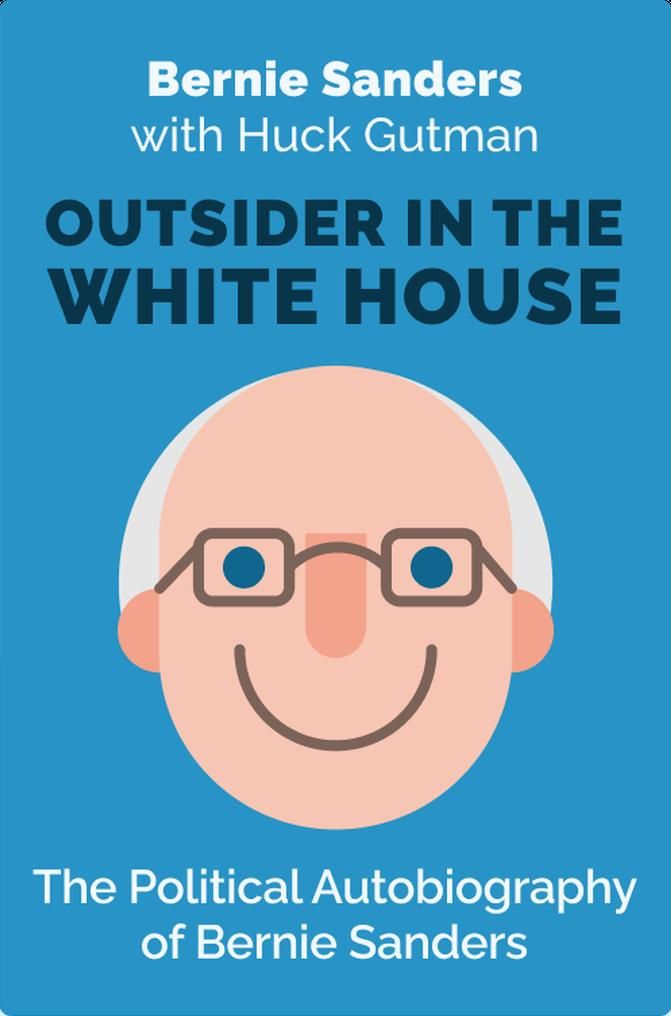
Outsider in the White House
The political autobiography of the insurgent presidential candidate
by Bernie Sanders with Huck Gutman
About this book
Outsider in the White House (2015) tells the story of Bernie Sanders, the presidential candidate and US senator. From marching for civil rights in the 1960s to campaigning against big money in politics as a 2016 presidential candidate, Sanders has always been at the forefront of US left-wing politics. First published in 1997 as Outsider in the House, this updated version of Bernie Sanders’s autobiography traces his lifelong fight for social justice and economic fairness.
Chapter Preview
Chapter 1 of 6The financial hardships of Sanders’s upbringing taught him how greatly economics can affect people’s lives.
Bernard Sanders was born in 1941, in the Brooklyn borough of New York City. During his childhood, money was tight; his family managed to stay above the poverty line, but Sanders’s parents often fought about the best uses for the little money they had.
These conditions, however, taught Sanders the value of money.
From his mother, Dorothy, for example, he learned the importance of being thrifty. One day, instead of shopping at an inexpensive supermarket, Sanders bought groceries from a smaller, local store. When he got home, his mother scolded him, stressing the importance of frugality.
Sanders’s father, Elias, had lived through the Great Depression, so he knew what it was like to get by in hard economic times.
Originally from Poland, Elias worked hard as a paint salesman to provide for his family, and his strong work ethic sometimes led to conflicts between father and son.
For instance, when Sanders first applied to college, his father initially opposed the idea. Elias thought it wiser for Sanders to start making money rather than continuing his education.
It was Sanders’s older brother, Larry, who helped turn their parents’ common-sense economics into concrete political ideas.
At Brooklyn College, Larry was a chairman in the Democratic Party’s liberal-minded Young Democrats group, and every once in a while he would bring young Sanders along with him to meetings. During this time, Larry also introduced his brother to progressive political literature and newspapers.
So, by the time Sanders entered Brooklyn College, in 1959, he was well informed and keenly interested in politics, economics and history.
These interests and ambitions continued to blossom a year later when he transferred to the University of Chicago to study political science. Sanders immersed himself in literature in the school’s basement library, spending countless hours reading everything he could get his hands on.
5 More Chapters Available
Sign up for free to read all chapters, chat with the book, get personalized recommendations, and more.
Want to read more?
Join BookPulse to access all chapters, chat with books and authors, get AI-powered recommendations, and discover your next favorite read.