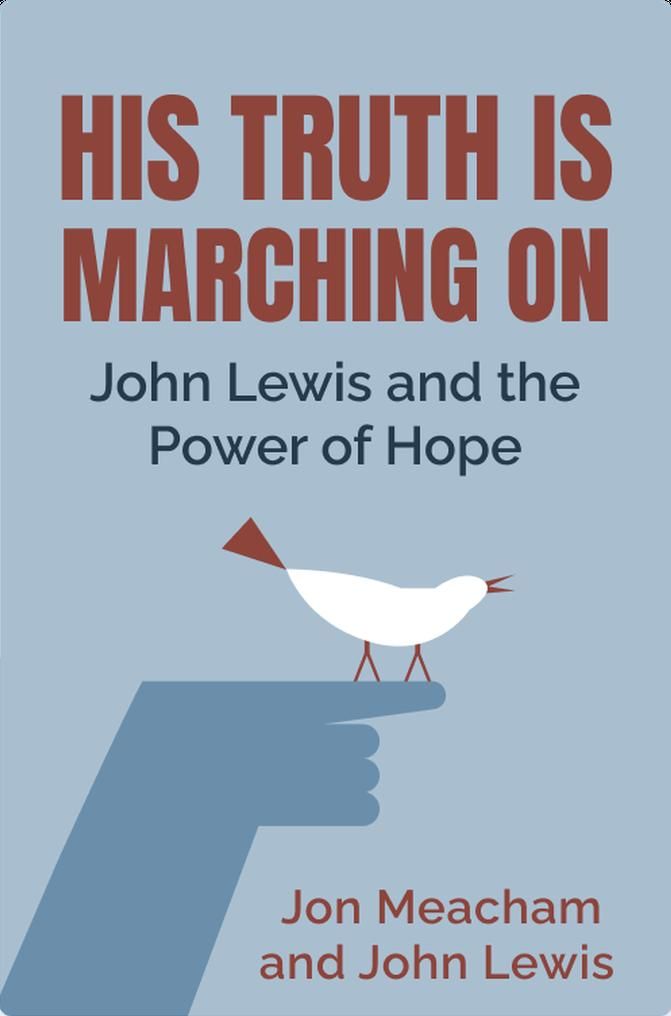
His Truth Is Marching On
John Lewis and the Power of Hope
by Jon Meacham and John Lewis
About this book
His Truth Is Marching On (2020) tells the extraordinary life story of the late congressman and civil rights leader John Lewis, interweaving his personal journey with the larger arc of American history.
Chapter Preview
Chapter 1 of 7Growing up in Alabama, John Lewis learned to connect faith and justice.
August 1955 in Money, Mississippi, a 14-year-old Black boy named Emmett Till is accused of whistling at a white woman. He's beaten to death by a white crowd – the lynching goes unpunished.
December 1955 in Montgomery, Alabama, a Black woman named Rosa Parks refuses to give up her seat on a segregated bus. She's arrested and charged – but goes on to lead a months-long boycott of the bus system.
February 1956 in Tuscaloosa, Alabama, a Black woman named Autherine Lucy tries to attend classes at the University of Alabama. She's attacked by a white mob and pelted with stones and rotten fruit.
This is the American South in the mid-1950s. It's a time and place where overt racism and segregation is the norm. But, it's also filled with courageous people fighting these injustices.
The key message here is: Growing up in Alabama, John Lewis learned to connect faith and justice.
John Lewis was born just outside of Troy, Alabama in February 1940. His parents were sharecroppers, and the family eked out a living raising chickens, cotton, and corn. Their house was small – three rooms with no electricity or running water – and all the children had to lend a hand on the farm. But as tough as life was at home, it was even worse out in the world.
It was the Jim Crow era, and Alabama, like other southern states, was segregated. African Americans were forced to use separate, inferior facilities, faced harsh barriers to voting, and received little protection from racist violence. This reality wasn't lost on Lewis, who felt the injustice firsthand when he saw how rundown his school was compared to the one for white kids.
One ray of hope came from his faith. Lewis's family attended the Macedonia African Methodist Episcopal church. He loved the community and the ritual, but he loved the preaching most of all. As a child, he was so inspired that he would practice by delivering rousing sermons to the chickens back on the farm.
In 1955, Lewis's faith took a new turn when he first heard Martin Luther King Jr. deliver a sermon on the radio. King spoke of the social gospel – a doctrine that said a true Christian wasn't only concerned about heaven but also dedicated to improving conditions here on earth.
King's words about fighting for justice, equality, and dignity struck a chord with Lewis. The civil rights movement was brewing around him, and King's teachings seemed like the right way forward.
6 More Chapters Available
Sign up for free to read all chapters, chat with the book, get personalized recommendations, and more.
Want to read more?
Join BookPulse to access all chapters, chat with books and authors, get AI-powered recommendations, and discover your next favorite read.