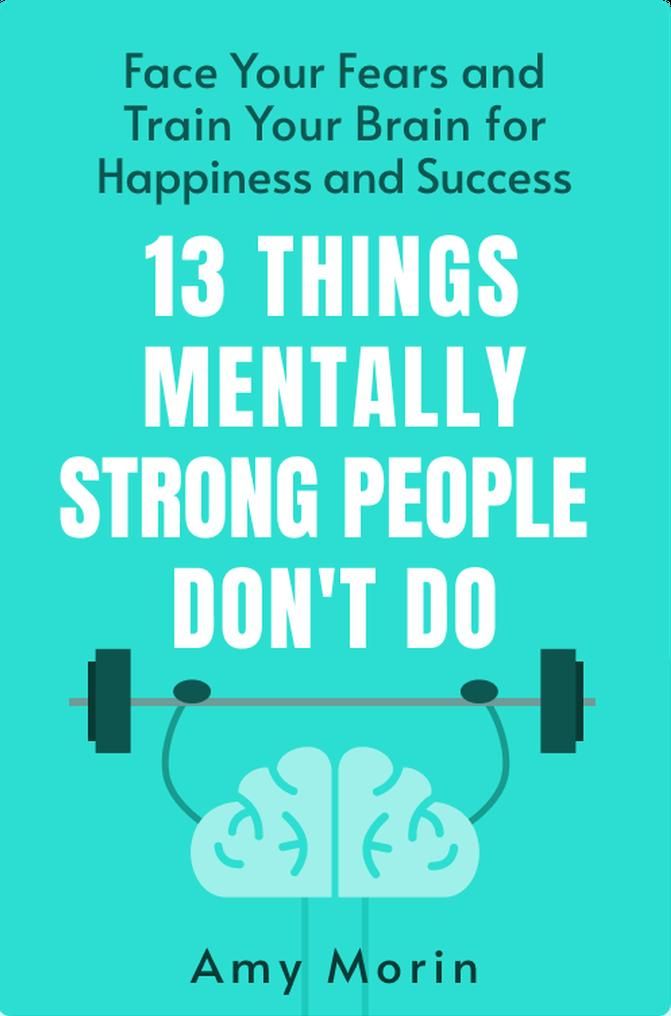
13 Things Mentally Strong People Don't Do
Take Back Your Power, Embrace Change, Face Your Fears and Train Your Brain for Happiness and Success
by Amy Morin
About this book
13 Things Mentally Strong People Don’t Do (2014) explains how to develop great mental strength by taking control of your emotions, thoughts, and actions. With useful tips, inspiring examples, and practical solutions, this book will help you overcome your fears and start living life to the fullest.
Chapter Preview
Chapter 1 of 13Mentally strong people replace self-pity with gratitude.
One day, Amy Morin witnessed a minor accident: two cars in a supermarket parking lot were backing up and bumped into each other. Morin watched the two drivers get out of the car and she couldn’t help noticing something. Even though those drivers just experienced the same accident, their reactions couldn’t have been more different. The first driver got out and looked almost relieved. How lucky he was that no one was seriously hurt! How miraculous that this hadn’t led to a serious injury! The second driver, however, felt rather unlucky: Oh great, he moaned. Just exactly what he needed! Why does this BS always happen to him?
So, what’s the point? Well, the second driver is a perfect example of the first behavior that mentally strong people don’t do: he is pitying himself. He is sulking, dwelling in his misfortune, throwing a pity party. People who pity themselves tend to think their problems are much worse. They complain that life is not fair and when you ask them how their day went, they will readily hand you a list of all the things that went wrong.
But as common as it is, it’s also a problem. Because feeling sorry for yourself can be quite self-destructive. You're not only wasting your time; you’re also training your mind to focus on the negatives. Which will make you more miserable, and this in turn will make you focus even more on the downsides. Meanwhile, all the good luck and positive experiences pass by unnoticed.
So, yes, self-pity is destructive. But how can you stop? Well, the most effective antidote is gratitude. If you’re stuck in a mindset of “Bad things are always happening to me,” just stop for a second. Sit down and write a list of the good things that have happened to you. To make it more regular, you can also keep a gratitude journal. All you have to do is write down at least one thing you are grateful for per day. Also, it helps to say it out loud – tell the people around you what life has gifted you.
Sooner or later, you might find yourself in the mindset of the first driver. Instead of complaining about a minor accident, you’ll actually feel thankful that nothing worse has happened. Which brings you one step closer to becoming a mentally strong person.
12 More Chapters Available
Sign up for free to read all chapters, chat with the book, get personalized recommendations, and more.
Want to read more?
Join BookPulse to access all chapters, chat with books and authors, get AI-powered recommendations, and discover your next favorite read.